The Proprietary Trap: Counting the Real Cost of Infrastructure Decisions That Age Badly
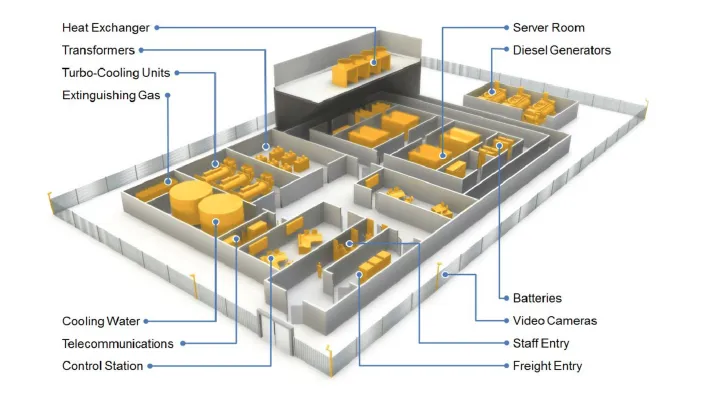
Photo: enterprise server room contract negotiation infrastructure decision, via www.elevatiq.com
The Commitment That Feels Neutral Until It Isn't
Every enterprise infrastructure decision arrives dressed in the language of capability. A vendor demonstrates deep feature sets, competitive pricing at current consumption levels, and a migration path that sounds straightforward on paper. What the sales cycle rarely surfaces is the structural reality that begins accumulating the moment the contract is signed: proprietary dependencies that compound in value to the vendor and in cost to the enterprise with every passing quarter.
This is not a new phenomenon, but its modern form is more sophisticated than the hardware lock-in of previous decades. Today's extraction mechanisms are embedded in software layers — managed service APIs that have no open equivalent, authentication frameworks tied to a single identity provider, observability pipelines that funnel data into formats readable only by the originating platform. None of these dependencies feel significant at deployment. Most of them become decisive at renewal.
How Proprietary Gravity Accumulates
The mechanism is worth examining in precise terms, because enterprise teams frequently underestimate it not from carelessness but from a measurement problem. At the point of initial deployment, the cost of switching is low. The infrastructure is new, integrations are shallow, and institutional knowledge of the platform is limited. Switching costs at month three are manageable.
By month eighteen, the calculus has shifted considerably. Engineering teams have built internal tooling against the vendor's proprietary SDK. Deployment pipelines reference platform-specific configuration syntax. Monitoring dashboards are structured around metrics exposed only through the vendor's agent. Customer-facing features may depend on managed services — queuing systems, caching layers, serverless execution environments — that have no portable equivalent without meaningful rearchitecting.
By month thirty-six, the picture is often worse. Staff who joined during the initial deployment now treat the vendor's ecosystem as the default mental model for infrastructure. Documentation references platform-specific terminology. Onboarding materials assume access to the vendor's console. The organization has, without any deliberate decision, built institutional knowledge that is only useful inside a single vendor's walls.
This is what the proprietary tax actually looks like: not a line item on an invoice, but a diffuse accumulation of switching friction that the vendor can convert into pricing leverage at every renewal cycle.
The 18-to-36 Month Inflection Point
Vendors who have been in enterprise markets long enough understand this curve well. Initial contract pricing is often structured to be competitive precisely because the vendor is investing in dependency accumulation. The return on that investment arrives at the first major renewal, typically somewhere between eighteen and thirty-six months post-deployment, when the enterprise team has completed the lock-in cycle without recognizing it as such.
At that inflection point, the conversation changes character. Pricing that was framed as volume-based becomes less negotiable. Features that were bundled into the initial tier migrate into premium tiers. Support SLAs that felt standard are reclassified as add-ons. The enterprise is not being deceived in any legally meaningful sense — the contracts typically permit these adjustments. But the practical effect is that the organization is paying a tax on decisions made by an earlier version of its own team, decisions that felt reasonable at the time and have since become structurally difficult to reverse.
Evaluating Portability Before the Signature
The most effective intervention is the one that happens earliest. Before a major infrastructure commitment is executed, enterprise architecture teams benefit from applying a structured portability evaluation that goes beyond the vendor's stated migration documentation.
API surface dependency mapping is the first discipline. For every managed service under consideration, the team should identify whether the API has an open standard equivalent — whether that is an S3-compatible object storage interface, an OpenTelemetry-compatible observability pipeline, or a Kubernetes-conformant orchestration layer. Where no open equivalent exists, the proprietary surface area should be documented explicitly and treated as a liability in the cost model, not a neutral feature.
Data egress modeling deserves dedicated attention. Vendors who charge for outbound data transfer create a compounding financial disincentive to migration that scales directly with the organization's growth. A service that appears cost-neutral at current data volumes may become a significant extraction mechanism as the business scales. Modeling egress costs at two times and five times current volume before committing to a platform is a basic discipline that many enterprise teams skip under timeline pressure.
Integration depth assessment should evaluate how many internal systems will develop dependencies on the vendor's proprietary layer. Each integration point is a future migration task. Counting them before deployment, rather than discovering them during an attempted exit, gives leadership an accurate picture of the long-term commitment being made.
Contractual portability clauses are worth negotiating explicitly. Provisions that guarantee data export in open formats, that cap egress charges during a defined migration window, or that require advance notice before tier reclassifications are not standard inclusions but are frequently negotiable, particularly for enterprise-scale commitments. Legal teams that treat these clauses as boilerplate are leaving meaningful optionality on the table.
The Organizational Accountability Gap
Part of what makes the proprietary trap durable is an accountability structure that distributes the consequences unevenly across time. The team that selects a vendor is rarely the same team that manages the renewal negotiation two years later. The architect who chose a proprietary managed service for its short-term convenience has often moved on by the time that choice becomes a budget problem. Renewal negotiations land on finance and procurement teams who inherit a set of dependencies they did not create and cannot quickly unwind.
Addressing this requires treating infrastructure vendor selection as a decision with a defined accountability lifecycle. The team that recommends a platform should be responsible for documenting its portability assessment, and that documentation should be revisited at the twelve-month mark, not only at renewal. Building portability reviews into standard infrastructure governance cadences — rather than treating them as one-time due diligence exercises — creates the organizational continuity that vendor selection decisions actually require.
Strategic Optionality as Infrastructure Discipline
The enterprise organizations that navigate vendor relationships most effectively are not those that avoid proprietary services entirely — that is neither practical nor always desirable. They are the ones that treat strategic optionality as a first-class infrastructure requirement, evaluated with the same rigor applied to performance, reliability, and security.
This means maintaining genuine alternatives at critical layers of the stack, not as a hedge that will never be exercised, but as a negotiating position that remains credible because it is technically real. A vendor who understands that migration is genuinely feasible prices and behaves differently than one who has correctly assessed that the switching cost is prohibitive.
The proprietary tax is not inevitable. It is the compounded result of decisions that prioritized short-term convenience over long-term flexibility, evaluated in isolation rather than as part of a multi-year cost model. Building the discipline to evaluate those decisions accurately, before commitments are made, is among the most consequential investments an enterprise infrastructure organization can make.